

- 16537 Rabbit hill Road SW, Edmonton AB T6W 5P4
- Mon to Fri 9am to 8pm | Sat : 9am to 1 pm | Sun : Closed
 Thu Jul 23
Muscle stiffness, persistent aches, and daily stress can gradually affect how you move and feel. Whether you spend long hours at a desk, work in a physically demanding job, or enjoy an active lifestyle, tight muscles and joint discomfort can make everyday activities more challenging. Ignoring these issues may allow them to worsen over time, leading to reduced mobility and recurring pain.
Many people search for natural ways to manage discomfort without relying solely on temporary solutions. Visiting a massage therapy clinic is one option that can support recovery, reduce muscle tension, and improve overall physical function. Massage therapy is no longer viewed as a luxury—it has become an important part of many rehabilitation and wellness plans.
For residents of Edmonton, finding professional care from experienced healthcare providers can make a significant difference. At Mindbody Physio, massage therapy is integrated with physiotherapy services to help individuals recover from injuries, improve movement, and return to daily activities with greater comfort and confidence.
In this guide, you’ll learn how massage therapy works, who can benefit from it, and why professional treatment can play an important role in supporting your health.
What Is a Massage Therapy Clinic?
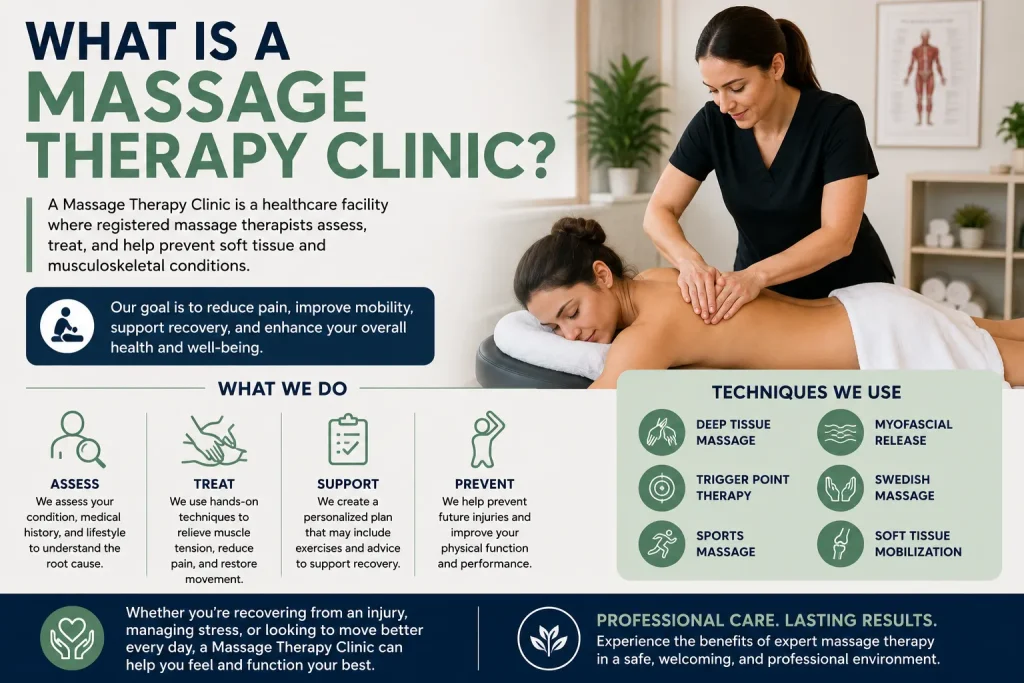
A massage therapy clinic is a healthcare facility where trained massage therapists assess and treat soft tissue conditions affecting muscles, tendons, ligaments, and connective tissue. The goal is to reduce muscle tension, improve circulation, restore mobility, and help the body recover from physical stress or injury.
Unlike a relaxing spa massage, therapeutic massage is often used alongside physiotherapy and rehabilitation programs to address specific conditions affecting movement and physical function.
Treatment may involve several manual techniques, including:
- Deep tissue massage
- Swedish massage
- Trigger point therapy
- Myofascial release
- Sports massage
- Soft tissue mobilization
- Stretching techniques
Each treatment is selected based on the patient’s condition, symptoms, and recovery goals.
How Does Massage Therapy Work?
Massage therapy works by applying controlled pressure to muscles and surrounding soft tissues.
These manual techniques help:
- Improve blood circulation
- Reduce muscle tightness
- Increase flexibility
- Improve joint mobility
- Encourage relaxation
- Support natural tissue recovery
Improved circulation allows oxygen and nutrients to reach muscles more efficiently while assisting with the removal of metabolic waste that contributes to soreness.
Massage therapy also influences the nervous system by reducing excessive muscle guarding, allowing muscles to relax more naturally.
Why Is It Important to Understand Massage Therapy?
Many people assume massage only provides temporary relaxation.
In reality, therapeutic massage can support recovery from many musculoskeletal conditions when performed by qualified professionals.
Understanding how treatment works allows patients to:
- Seek care before pain becomes chronic
- Make informed healthcare decisions
- Improve recovery after injuries
- Reduce the risk of recurring muscle problems
- Support physiotherapy treatment plans
Early intervention often results in improved outcomes compared with waiting until pain becomes severe.
Why Do Muscle Pain and Stress Happen?
Muscle tension develops for many different reasons.
Some of the most common causes include:
- Poor posture
- Repetitive work
- Sports activities
- Emotional stress
- Previous injuries
- Limited movement
- Overuse
- Aging
Let’s examine each one more closely.
Poor Posture
Many people spend hours sitting in front of computers every day.
Poor sitting posture places additional strain on the neck, shoulders, and lower back.
Over time, muscles remain contracted for extended periods, leading to stiffness and discomfort.
Repetitive Workplace Activities
Construction workers, office employees, healthcare professionals, and tradespeople often perform repetitive movements throughout the day.
Repeated lifting, bending, typing, or reaching creates stress on muscles and tendons.
Without proper recovery, irritation develops gradually.
Sports and Physical Activity
Exercise improves overall health, but repetitive training can overload muscles and soft tissues.
Common examples include:
- Running
- Hockey
- Soccer
- Weight training
- Tennis
- Cycling
Small strains that are ignored may eventually develop into persistent pain.
Emotional Stress
Stress affects both the mind and body.
Many people unknowingly tighten their neck, shoulders, jaw, and back during stressful situations.
Persistent muscle contraction may contribute to:
- Headaches
- Neck stiffness
- Shoulder pain
- Fatigue
- Reduced flexibility
Massage therapy encourages muscles to relax while promoting a calmer physical state.
Previous Injuries
Old injuries sometimes leave lingering tightness or weakness.
The body often compensates by changing movement patterns.
These changes may place additional stress on nearby muscles and joints.
Professional treatment helps restore normal movement and reduce unnecessary strain.
Aging
As we age, muscles and connective tissues naturally lose some flexibility.
Recovery from physical activity may take longer, increasing the likelihood of stiffness and reduced mobility.
Regular treatment combined with exercise may help maintain healthy movement.
Signs You Should Visit a Massage Therapy Clinic
Not every ache requires professional treatment.
However, persistent symptoms deserve attention.
Common warning signs include:
- Neck pain that continues for weeks
- Shoulder tightness
- Lower back discomfort
- Limited flexibility
- Muscle soreness after activity
- Headaches caused by muscle tension
- Difficulty turning your neck
- Pain while sitting for long periods
- Muscle tightness that returns repeatedly
Some people also experience hidden symptoms, including:
- Reduced athletic performance
- Poor posture
- Difficulty sleeping due to discomfort
- Frequent muscle fatigue
- Reduced range of motion
Seeking treatment early often helps prevent more significant movement problems.
How Does Professional Massage Therapy Work?
At Mindbody Physio, every treatment begins with understanding the individual rather than focusing only on symptoms.
Step 1: Initial Assessment
The massage therapist discusses:
- Current symptoms
- Medical history
- Previous injuries
- Daily activities
- Occupation
- Exercise habits
A physical assessment evaluates:
- Muscle tension
- Joint movement
- Flexibility
- Pain patterns
- Posture
This helps identify contributing factors rather than simply treating sore muscles.
Step 2: Treatment Planning
Based on the assessment, a treatment plan is developed to match your condition and recovery goals.
Depending on your needs, treatment may include the following:
- Deep tissue massage
- Trigger point release
- Myofascial techniques
- Gentle stretching
- Soft tissue mobilization
- Relaxation-focused massage
If appropriate, massage therapy may also be combined with physiotherapy exercises and movement education for a more comprehensive approach.
Step 3: Hands-On Treatment
During the session, the therapist uses specific manual techniques to address tight muscles, restricted tissues, and areas of discomfort. Pressure is adjusted based on your comfort level and the condition being treated.
Treatment focuses on improving tissue mobility, reducing muscle tension, and supporting healthy movement patterns.
Benefits of Choosing a Professional Massage Therapy Clinic
Choosing a professional massage therapy clinic provides more than temporary muscle relaxation. When treatment is performed by qualified massage therapists who understand anatomy, biomechanics, and injury rehabilitation, it can support your recovery while helping you move more comfortably in daily life.
At Mindbody Physio in Edmonton, massage therapy is often integrated with physiotherapy to address the underlying causes of pain rather than focusing only on symptoms.
Reduces Muscle Tension
Tight muscles can develop from prolonged sitting, repetitive work, athletic activities, or emotional stress. These restrictions may reduce flexibility and place additional strain on nearby joints.
Massage therapy helps release muscle tightness through targeted manual techniques, allowing muscles to relax and move more naturally.
Improves Blood Circulation
Healthy circulation plays an important role in tissue repair. Massage encourages blood flow to muscles and connective tissues, delivering oxygen and nutrients while helping remove metabolic waste that can contribute to soreness.
Improved circulation may also reduce post-exercise stiffness and support recovery after physical activity.
Supports Injury Recovery
Whether you’ve experienced a sports injury, workplace strain, or muscle overuse, massage therapy can become an important part of your rehabilitation plan.
Combined with physiotherapy, treatment may help the following:
- Improve tissue mobility
- Reduce muscle guarding
- Restore flexibility
- Improve movement patterns
- Support rehabilitation exercises
Improves Joint Mobility
When muscles become tight, joints often lose part of their natural range of motion.
By reducing soft tissue restrictions, massage therapy allows joints to move more freely, making everyday activities like bending, reaching, and walking easier.
Helps Manage Stress
Physical tension and emotional stress often influence one another.
Many people carry stress in their
- Neck
- Shoulders
- Upper back
- Jaw
- Lower back
Massage therapy encourages relaxation by calming the nervous system, helping reduce physical tension while promoting a greater sense of well-being.
Helps Prevent Future Problems
Many people seek treatment only after pain becomes severe.
Regular visits to a massage therapy clinic may help identify developing muscle tightness before it contributes to larger movement problems.
Preventative care is particularly valuable for individuals with physically demanding jobs or active lifestyles.
Common Mistakes People Make
Although massage therapy is highly beneficial, several common habits may reduce its effectiveness.
Waiting Too Long
Many people ignore discomfort until pain interferes with daily activities.
Early assessment often allows minor muscle tightness to be addressed before it becomes a more complex condition.
Depending Only on Massage
Massage therapy provides valuable benefits, but lasting improvement often requires additional rehabilitation.
Depending on your condition, your physiotherapist may also recommend the following:
- Strengthening exercises
- Stretching
- Postural correction
- Movement retraining
- Activity modification
Combining these strategies often produces more sustainable results.
Skipping Home Exercises
Exercises prescribed after treatment help maintain progress between appointments.
Ignoring these recommendations may allow muscle tightness to return more quickly.
Poor Workplace Ergonomics
Even excellent treatment may have limited effect if poor posture continues throughout the workday.
Small ergonomic adjustments often reduce unnecessary strain on muscles and joints.
Returning to Activity Too Quickly
Athletes sometimes resume training immediately after symptoms improve.
Without restoring full strength and mobility, reinjury becomes more likely.
Prevention and Maintenance Tips
Healthy muscles require regular care.
The following habits can reduce the likelihood of recurring discomfort.
Stay Physically Active
Movement helps maintain healthy muscles and joints.
Walking, swimming, cycling, and strength training all support long-term mobility.
Stretch Regularly
Gentle stretching helps maintain flexibility while reducing muscle tightness.
Pay particular attention to:
- Neck
- Shoulders
- Hips
- Hamstrings
- Calves
- Lower back
Maintain Good Posture
Whether working at a computer or lifting heavy objects, proper posture reduces unnecessary stress on muscles.
Simple workstation adjustments often improve comfort significantly.
Take Frequent Breaks
Avoid remaining in one position for extended periods.
Standing, stretching, or walking every hour helps reduce muscle fatigue.
Stay Hydrated
Muscles function more efficiently when the body remains well hydrated.
Adequate hydration also supports tissue recovery after exercise and manual therapy.
Warm Up Before Exercise
Preparing muscles before physical activity reduces the likelihood of strains and overuse injuries.
Monitor Warning Signs
Seek professional assessment if you notice:
- Persistent stiffness
- Reduced flexibility
- Recurring muscle tightness
- Pain during activity
- Limited movement
Early treatment often prevents symptoms from progressing.
How to Choose the Right Massage Therapy Clinic in Edmonton
Not every clinic provides the same level of assessment and rehabilitation.
When choosing a massage therapy clinic, consider the following factors.
Qualified Professionals
Choose therapists registered and trained in therapeutic massage techniques.
Professional qualifications ensure treatment is based on current clinical knowledge.
Comprehensive Assessment
Quality treatment begins with understanding the cause of pain rather than simply treating sore muscles.
A thorough evaluation helps identify contributing movement patterns.
Integrated Services
Clinics that combine massage therapy with physiotherapy can provide a more complete rehabilitation approach.
This allows different treatments to complement one another when appropriate.
Modern Treatment Approach
Look for clinics that emphasize evidence-informed care and individualized treatment plans.
Your condition, goals, and activity level should guide treatment decisions.
Positive Reviews
Patient reviews often provide useful insight into:
- Communication
- Professionalism
- Treatment quality
- Overall patient experience
Local Knowledge
Choosing a clinic familiar with Edmonton’s climate, workplaces, and active community allows treatment recommendations to better reflect local lifestyles.
Why Choose Mindbody Physio?
Mindbody Physio proudly serves individuals and families throughout Edmonton with physiotherapy and massage therapy services focused on restoring movement and improving physical function.
Every patient receives an individualized assessment to determine the source of their symptoms before treatment begins.
Our approach combines clinical knowledge with hands-on care to help patients recover from injury, reduce muscle tension, and improve mobility.
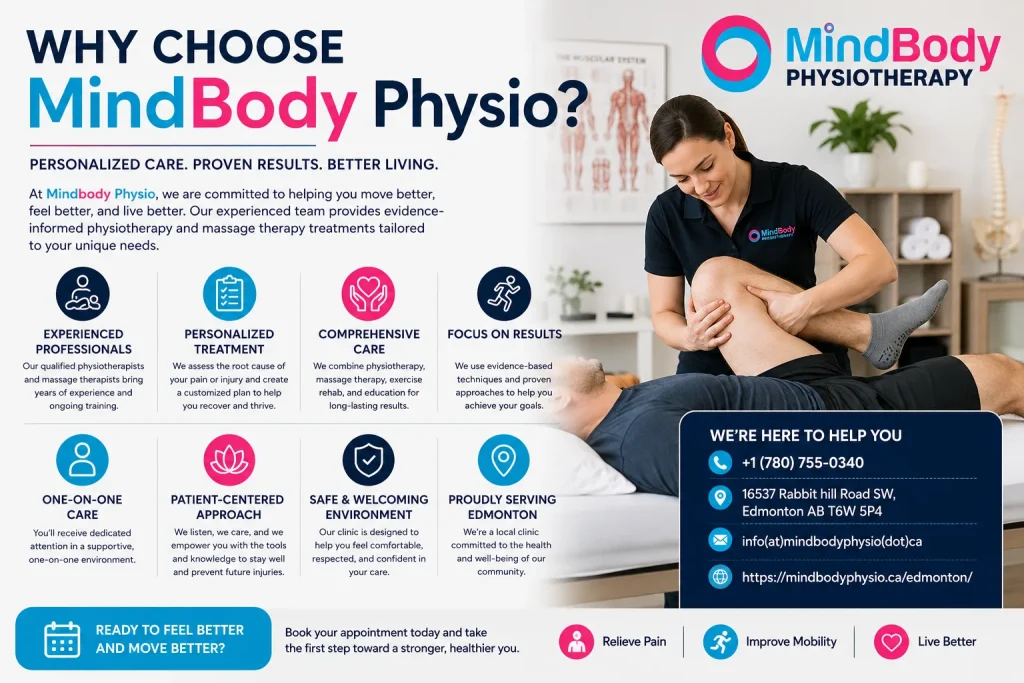
Patients choose Mindbody Physio because we provide the following:
- Thorough assessments
- Registered massage therapy
- Physiotherapy services
- One-on-one care
- Evidence-informed treatment
- Individualized rehabilitation plans
- Patient education and home exercise guidance
- A welcoming environment focused on recovery
Whether you’re experiencing chronic muscle tension, recovering from an injury, or looking to improve everyday movement, our team is committed to helping you reach your goals.
Contact Us
If muscle pain, stiffness, or ongoing stress is affecting your quality of life, professional assessment can help identify the cause and recommend the most appropriate treatment.
Mindbody Physio
📍 Address:
16537 Rabbit Hill Road SW
Edmonton, AB T6W 5P4
📞 Phone:
+1 (780) 755-0340
🌐 Website:
https://mindbodyphysio.ca/edmonton/
📍 Find Us:
https://maps.app.goo.gl/B5BQ9uYeZ5HaQrSD7
Contact Mindbody Physio today to schedule an appointment and learn how massage therapy and physiotherapy can support your recovery, improve mobility, and help you return to the activities you enjoy.
Frequently Asked Questions
1. What does a massage therapy clinic treat?
A massage therapy clinic can help manage muscle tension, sports injuries, neck pain, back pain, shoulder discomfort, repetitive strain injuries, tension headaches, and mobility restrictions. Treatment is tailored to each person’s condition and goals.
2. How often should I visit a massage therapy clinic?
The frequency of visits depends on your condition, activity level, and recovery goals. Some people benefit from weekly sessions during rehabilitation, while others schedule maintenance visits every few weeks.
3. Is massage therapy different from a relaxation massage?
Yes. Therapeutic massage focuses on assessing and treating muscle and soft tissue conditions that affect movement and function, whereas relaxation massage is primarily intended to promote general relaxation.
4. Can massage therapy and physiotherapy be combined?
Yes. Massage therapy is often combined with physiotherapy to reduce muscle tension, improve tissue mobility, and support exercise-based rehabilitation for more comprehensive care.
5. Is massage therapy suitable after a sports injury?
In many cases, yes. Massage therapy may help reduce muscle tightness, improve circulation, and support recovery. A professional assessment helps determine the right timing and treatment approach.
6. Does massage therapy help with stress?
Yes. Massage therapy can encourage relaxation, reduce muscle tension associated with stress, and promote a calmer physical state, making it a valuable part of overall wellness.
7. Why should I choose Mindbody Physio in Edmonton?
Mindbody Physio provides individualized care that combines physiotherapy and massage therapy to address the root cause of pain and movement limitations. Patients benefit from comprehensive assessments, one-on-one treatment, and a focus on restoring mobility and supporting long-term physical health.





Get the physiotherapy you deserve!
Call us anytime