

- 16537 Rabbit hill Road SW, Edmonton AB T6W 5P4
- Mon to Fri 9am to 8pm | Sat : 9am to 1 pm | Sun : Closed
 Tue Aug 25
Supporting Active Movement With Shockwave therapy
Staying active through running, cycling, strength training, sports, or hiking places regular demands on muscles, tendons, and joints. This may sometimes contribute to discomfort, limited movement, or difficulty returning to training.
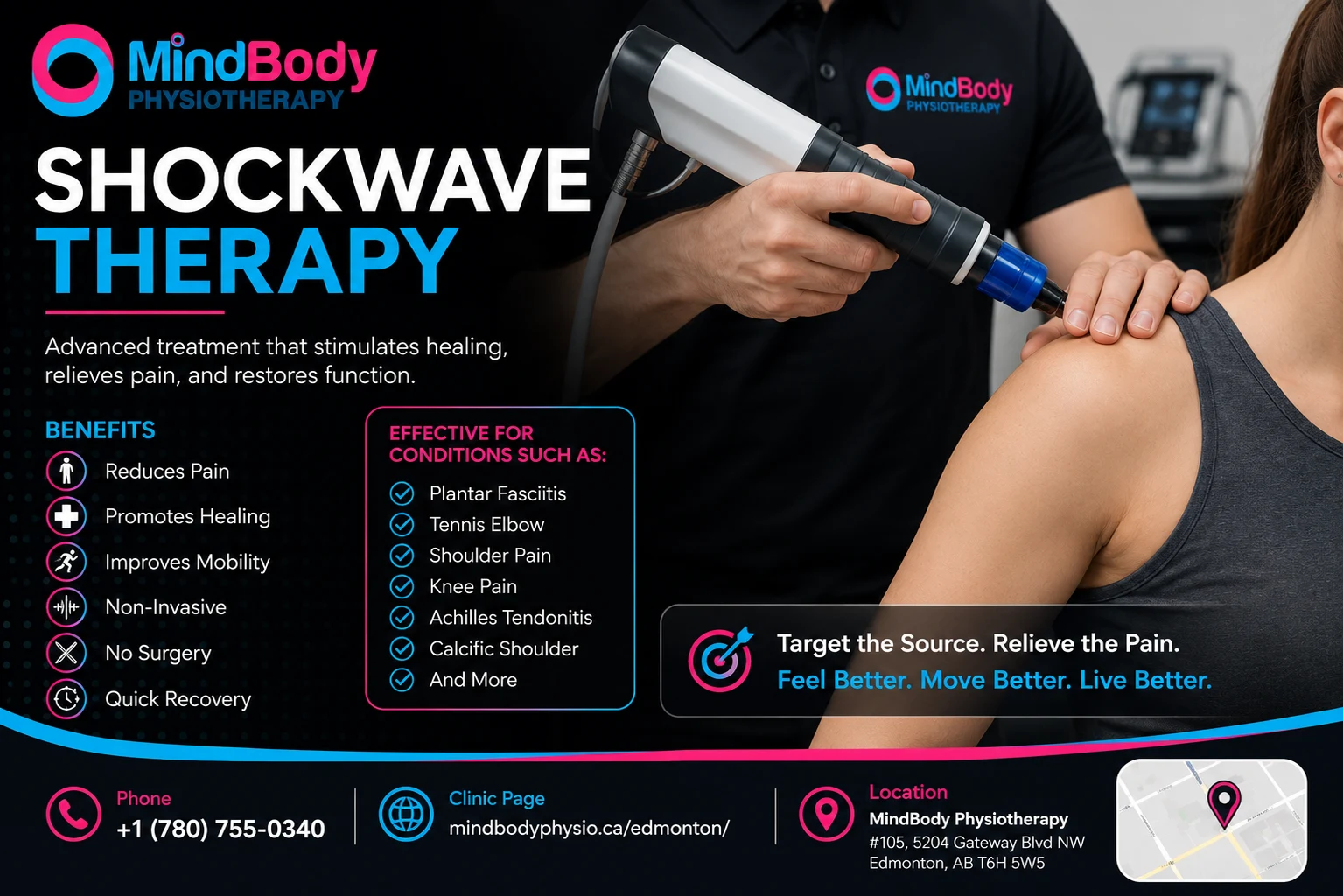
Shockwave therapy is a non-invasive physiotherapy modality that uses acoustic waves on targeted areas. It has been studied for conditions such as plantar fasciitis, lateral elbow tendinopathy, and proximal hamstring tendinopathy.
For active people, physiotherapy may address strength, mobility, training habits, movement patterns, and gradual return to exercise. At MindBody Physiotherapy & Wellness in South Edmonton, shockwave therapy may be included alongside exercise and other physiotherapy strategies when clinically appropriate.
What Is Shockwave therapy?
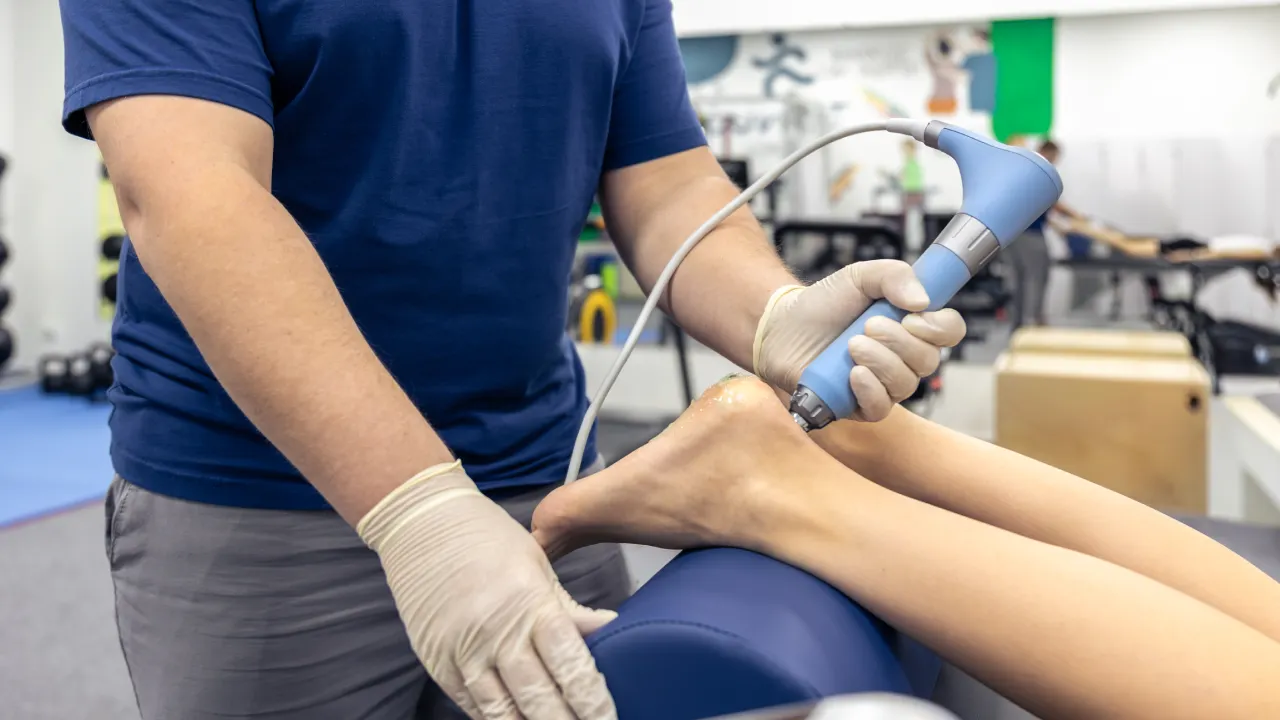
Shockwave therapy uses mechanical acoustic waves delivered to a selected area of the body through an applicator. Depending on the condition and treatment approach, radial or focused forms may be used.
The treatment does not involve surgery or needles. During a session, the physiotherapist places the applicator over the target area and delivers controlled pulses. Some people notice tapping, pressure, or temporary sensitivity during treatment.
Research suggests that shockwave treatment can have different results depending on the condition being treated, the type of shockwave used, the dosage, and whether it is combined with exercise. It should therefore be viewed as one component of a physiotherapy plan rather than a universal solution.
1. May Support a Return to Physical Activity
When an ongoing tendon or soft-tissue problem interferes with exercise, getting back to normal activity can become difficult. A structured physiotherapy plan may help address the factors that are limiting movement.
Shockwave therapy may be included when a suitable musculoskeletal condition is present. Research involving physically active people has found potential value for selected conditions, including plantar fasciitis, lateral epicondylitis, and proximal hamstring tendinopathy.
The aim is to help create conditions in which appropriate movement and exercise can continue as part of rehabilitation.
Your physiotherapist can also consider how much activity is appropriate during treatment. This can be particularly useful for runners, athletes, gym users, and people whose daily routines involve frequent physical activity.
2. May Support Tendon Function
Tendons connect muscles to bones and play an important role in movement. Repetitive loading from running, jumping, lifting, throwing, or other activities can place substantial demands on these tissues.
Shockwave therapy has been studied for several forms of tendinopathy. Research on lower-limb tendinopathy has reported improvements in pain and function in some groups, although results vary between conditions and treatment methods.
For active people, tendon care usually involves more than one component. Progressive strengthening, load management, mobility work, technique adjustments, and gradual activity progression may all form part of the plan.
Shockwave therapy may be considered when a clinician determines that it is appropriate for the specific tendon condition.
3. May Complement Exercise-Based Physiotherapy
Exercise remains an important part of rehabilitation for many musculoskeletal conditions. Strengthening can help improve the capacity of muscles and tendons to handle physical demands.
Shockwave therapy may be used alongside exercise rather than replacing it. A systematic review of athletes and physically active individuals found that shockwave treatment may have a role either on its own for certain conditions or as an addition to exercise-based care for others.
This combination can make sense for active people because rehabilitation can address both the symptoms and the physical demands that contributed to the problem.
For example, someone returning to running may need a gradual strengthening program for the calf and lower leg, while a recreational tennis player may need exercises that address forearm strength and load tolerance.
4. May Help Address Activity-Related Tendon Problems
Different activities place different loads on the body. Runners may experience problems involving the foot, ankle, calf, or knee. People who play racquet sports may place repeated stress on the elbow and shoulder. Weight training can increase demands on multiple muscle-tendon units.
Shockwave therapy in Edmonton has been investigated across several sports-related conditions. A systematic review involving 56 studies and 1,874 athletes or physically active people reported potential benefits for selected conditions, while also noting that further research is needed.
This means the treatment should not be viewed as suitable for every activity-related injury. Assessment remains important before deciding whether it has a role in care.
5. May Fit into a Non-Surgical Treatment Plan
Many active people prefer to explore non-surgical approaches when appropriate. Shockwave treatment is delivered externally and does not require an incision.
For certain musculoskeletal conditions, it may be considered alongside exercise, activity modification, manual therapy, education, and other physiotherapy strategies.
However, non-invasive does not mean suitable for everyone. A physiotherapist should review the symptoms, medical history, physical findings, and activity goals before deciding whether this modality is appropriate.
If symptoms are caused by a condition that requires medical assessment, referral may also be recommended.
6. May Support Function During a Gradual Return to Training
Returning to sport or exercise often requires a gradual increase in physical workload. Moving from limited activity straight into intense training can place substantial stress on tissues that have not yet regained sufficient capacity.
A physiotherapy program can help establish appropriate stages for returning to activity. Shockwave therapy in Edmonton may be included when the clinical assessment identifies a condition for which it is useful.
For example, a runner might begin with walking and low-impact exercise before progressing toward jogging. A field-sport athlete may gradually move from strength exercises to running drills, directional changes, and sport-specific activity.
The focus is on building capacity progressively rather than rushing back to the previous training level.
7. May Help Active People Stay Focused on Movement
Persistent musculoskeletal symptoms can affect how someone approaches exercise. A person may avoid certain movements, reduce training frequency, or become hesitant about returning to an activity they enjoy.
A structured physiotherapy program can provide a clear framework for monitoring symptoms, modifying activity, and progressing exercise.
Shockwave therapy in Edmonton may be one part of that process when clinically indicated. Its role is not to replace movement but to work alongside rehabilitation strategies that address strength, mobility, load, and functional goals.
For active people, maintaining appropriate movement throughout rehabilitation can be an important part of returning to routines.
5 Positive Things to Know About Shockwave therapy in Edmonton
1. It Is Non-Invasive
The treatment is delivered through the skin using an applicator. There is no surgical incision involved.
2. Sessions Are Usually Relatively Short
Treatment time can vary according to the body area, condition, and clinical plan. Your physiotherapist can explain what a typical appointment may involve.
3. It Can Be Combined With Exercise
Shockwave treatment does not necessarily stand alone. Exercise and progressive loading may remain important parts of rehabilitation.
4. It Has Been Studied in Active Populations
Research has examined shockwave treatment among athletes, physically active adults, and people with activity-related musculoskeletal conditions.
5. Treatment Can Be Based on the Specific Condition
There is no single protocol for every person. The type of shockwave, treatment intensity, number of sessions, and accompanying exercises may vary according to the condition and clinical assessment.
How Can Active People Prepare for Treatment?
Before a session, share information about your activity level, recent training changes, previous injuries, current symptoms, and any medical conditions that may affect treatment.
It can also be useful to keep track of activities that increase symptoms. This may help your physiotherapist identify patterns related to your training load.
After treatment, follow the activity recommendations provided by your physiotherapy team. Depending on the condition, temporary sensitivity may occur, so activity may need to be adjusted for a short period.
Avoid making major changes to your exercise routine without discussing them with your clinician.
Who May Consider Shockwave Therapy?
Shockwave treatment may be considered for some people with persistent tendon or musculoskeletal problems, particularly when symptoms are affecting exercise or everyday movement.
Active people who may ask about it include:
- Runners with persistent foot or tendon symptoms
- Recreational athletes with tendon-related problems
- Gym users dealing with activity-related musculoskeletal symptoms
- Cyclists experiencing movement-related discomfort
- People returning to exercise after a prolonged break
- Individuals whose symptoms have continued despite initial conservative care
A clinical assessment is still needed to determine whether this approach is appropriate.
5 FAQs About Shockwave therapy
1. Is Shockwave therapy painful?
Some people feel tapping, pressure, or temporary sensitivity during a session. The sensation can vary according to the treatment area, settings, and individual tolerance.
2. How many sessions are needed?
The number of sessions varies according to the condition and clinical plan. Your physiotherapist can discuss the expected schedule after assessment.
3. Can I exercise while receiving Shockwave therapy?
In many cases, exercise remains part of rehabilitation. However, the type and amount of activity may need to be adjusted according to symptoms and tissue capacity.
4. Is Shockwave therapy suitable for every sports injury?
No. It is not appropriate for every injury or condition. A physiotherapy assessment can determine whether it has a role in your care.
5. Can Shockwave therapy replace physiotherapy exercises?
It is generally considered a treatment modality rather than a replacement for rehabilitation exercise. Strength, mobility, movement retraining, and gradual loading may remain important depending on the condition.
Stay Active with Support from MindBody Physiotherapy & Wellness
Active living can become difficult when musculoskeletal symptoms affect exercise or daily movement. At MindBody Physiotherapy & Wellness in South Edmonton, physiotherapy may include assessment, exercise planning, movement work, and suitable treatment options.
If you are wondering whether Shockwave therapy may suit your condition, speak with our team at MindBody Physiotherapy & Wellness. An assessment can help identify the source of your symptoms and determine whether this treatment has a suitable role within your physiotherapy plan.”
Contact MindBody Physiotherapy & Wellness located at 16537 Rabbit Hill Rd SW, Edmonton, AB T6W 5P4, Canada, or call +1 780-755-0340 to schedule an appointment and discuss your movement or activity concerns.




Get the physiotherapy you deserve!
Call us anytime