

- 16537 Rabbit hill Road SW, Edmonton AB T6W 5P4
- Mon to Fri 9am to 8pm | Sat : 9am to 1 pm | Sun : Closed
 Wed Sep 23
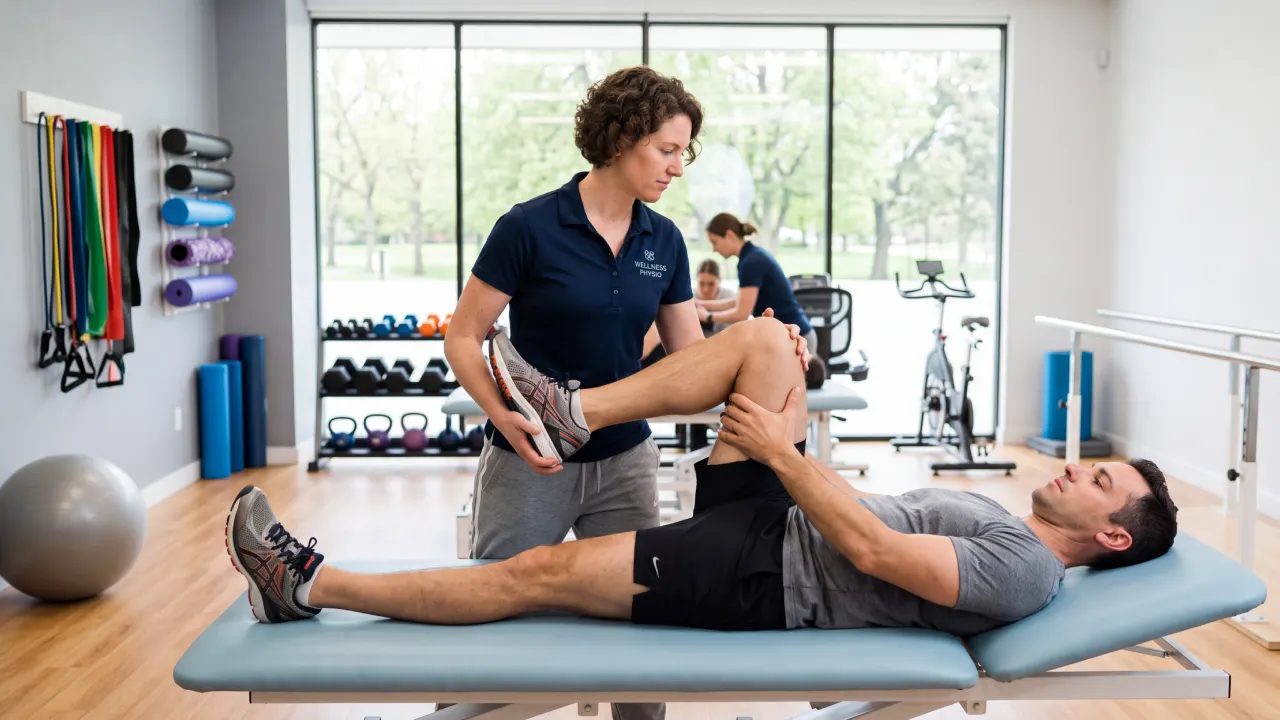
When Sports Injuries May Need Advanced Assessment and Rehabilitation
Sports injuries can happen during training, competition, recreational activities, or even routine workouts. A sudden twist, awkward landing, repetitive movement, or excessive training load can affect muscles, tendons, ligaments, joints, and other parts of the body. While some minor issues may settle with rest and gradual activity, ongoing symptoms can interfere with movement, exercise, and athletic goals.
For athletes in Edmonton, recognizing when an injury needs further assessment can help prevent unnecessary interruptions to training. Advanced Sports Physiotherapy can involve a detailed assessment of movement, strength, flexibility, coordination, and injury-related limitations. The findings can help a physiotherapist determine appropriate rehabilitation strategies based on the athlete’s current condition and goals.
Below are eight signs that may indicate it is time to seek professional assessment for a sports injury.
1. Your Injury Symptoms Keep Returning
An injury that repeatedly comes back after you resume training may indicate that the underlying movement or loading issue has not been fully addressed. For example, an athlete may repeatedly develop ankle discomfort after running, shoulder symptoms after throwing, or knee problems after jumping.
Temporary rest may reduce symptoms, but returning to the same training pattern without addressing contributing factors can place the affected area under similar stress again.
Advanced Sports Physiotherapy may include an assessment of movement patterns, muscle strength, joint mobility, balance, coordination, and sport-specific activities. This information can help identify factors that may be contributing to repeated symptoms.
A rehabilitation plan may then include exercises and gradual loading activities that correspond with the athlete’s sport and current abilities.
2. Your Performance Has Started to decline.
A sports injury does not always prevent an athlete from participating. Sometimes, the first noticeable change is a reduction in performance.
You may find that:
- You cannot run at your usual speed.
- Jumping feels less powerful.
- Your throwing distance has decreased.
- You fatigue sooner during training.
- You avoid certain movements.
- Your coordination feels different.
- You need more time between training sessions.
These changes can occur when an injury affects strength, mobility, confidence, or movement efficiency.
Advanced Sports Physiotherapy can assess how an injury influences sport-specific movement. For example, a physiotherapist may examine running mechanics, landing patterns, strength differences, range of motion, or balance depending on the athlete’s sport.
This type of assessment can provide useful information for planning the next stage of rehabilitation.
3. You Have Noticeable Strength Differences
Strength differences between limbs are common after injuries. An athlete recovering from a knee, ankle, shoulder, or muscle injury may unconsciously rely more heavily on the unaffected side.
This compensation can become noticeable during exercises or sport-specific movements. For instance, an athlete recovering from a leg injury may shift weight to the opposite side while squatting or landing.
Strength testing can help identify differences that may not be obvious during everyday activities.
Advanced Sports Physiotherapy may use progressive strengthening exercises to address specific deficits. Depending on the injury, rehabilitation may include resistance exercises, controlled functional movements, balance activities, and sport-specific drills.
The progression should match the athlete’s current capacity rather than moving immediately into demanding activities.
4. You Are Struggling with Mobility
Limited mobility can affect the way an athlete runs, jumps, changes direction, lifts, reaches, or performs other sport-specific actions.
For example, reduced ankle mobility may influence a squat or landing position, while limited shoulder movement may affect an overhead athlete. Hip mobility restrictions may also alter movement during running or changes of direction.
Mobility limitations can result from swelling, muscle tightness, joint stiffness, protective movement patterns, or time away from activity.
A physiotherapy assessment can examine which movements are restricted and how those restrictions affect functional tasks. Advanced Sports Physiotherapy may incorporate mobility exercises, strengthening, movement retraining, and gradual return-to-sport activities.
The goal is to help athletes develop movement capacity appropriate for their sport while considering the current stage of recovery.
5. Everyday Activities Are Becoming Difficult
A sports injury can extend beyond training sessions. When symptoms begin affecting walking, climbing stairs, getting dressed, sitting, reaching, or household activities, further assessment may be appropriate.
For an Edmonton athlete balancing sports with work, school, family responsibilities, and daily activities, an injury can create challenges across multiple areas of life.
An assessment can help determine how the injury affects functional movement and whether certain activities should be modified temporarily.
Advanced Sports Physiotherapy can also focus on gradually rebuilding capacity through structured exercises. The program may progress from basic movements to more demanding tasks as strength, mobility, coordination, and tolerance improve.
This gradual process can help an athlete prepare for the physical demands of training rather than moving from inactivity directly into intense exercise.
6. You Have Difficulty Returning to Your Sport
Returning to sport involves more than waiting until symptoms decrease. Athletes often need sufficient strength, mobility, balance, coordination, endurance, and confidence to handle sport-specific demands.
A soccer player, for example, may need to sprint, stop quickly, change direction, kick, and compete for the ball. A basketball player may need to jump, land, pivot, accelerate, and decelerate repeatedly.
If you are unsure whether your body is ready for these activities, a physiotherapy assessment can help identify areas that still require attention.
Advanced Sports Physiotherapy may include staged return-to-sport exercises that gradually increase physical demands. These activities can be adjusted according to the injury, sport, training level, and progress observed during rehabilitation.
Rather than treating sport participation as an immediate return-or-no-return decision, rehabilitation can use progressive steps that build toward specific athletic tasks.
7. You Notice Pain or Discomfort During Training
Discomfort during exercise can have different causes, and its significance depends on factors such as location, intensity, duration, movement, and injury history.
An athlete may notice symptoms only during sprinting, lifting, jumping, throwing, or another specific activity. Others may notice discomfort after training rather than during the session.
Ignoring recurring symptoms and repeatedly increasing training intensity may make it harder to determine what is contributing to the problem.
Advanced Sports Physiotherapy may involve reviewing training habits, movement patterns, injury history, and physical capacity. The physiotherapist can then determine which activities may need temporary modification while rehabilitation continues.
Athletes should also seek appropriate medical assessment when symptoms are severe, rapidly worsening, associated with major swelling or deformity, or accompanied by other concerning signs.
8. You Are Unsure How to Progress Your Training
One of the challenges after an injury is knowing when and how to increase activity. Athletes may feel ready because everyday movement has improved, yet struggle when they return to high-speed, high-impact, or repetitive sports activities.
Returning too quickly can place demands on tissues that have not yet adapted to the workload. Staying inactive for too long can also leave an athlete with reduced strength or conditioning.
A structured progression can bridge the gap between basic rehabilitation exercises and full sports participation.
Advanced Sports Physiotherapy may use progressive loading, functional exercises, agility drills, balance work, strength training, and sport-specific activities. The exact progression depends on the athlete’s injury and physical demands.
Monitoring how the body responds to increased workload can also help guide the next stage of training.
How Advanced Sports Physiotherapy May Support Athletic Performance
Athletic performance depends on multiple physical qualities working together. Strength, mobility, balance, coordination, speed, endurance, and movement control can all contribute to how an athlete performs.
Rehabilitation is not limited to addressing an injury. Once an athlete is medically appropriate for progressive exercise, physiotherapy may also focus on movement quality and physical capacity.
Movement Assessment
A movement assessment can examine how an athlete performs activities such as squatting, jumping, landing, running, lunging, reaching, or changing direction.
Identifying movement differences may help determine which areas require additional attention during training.
Strength Development
Strength is important for many sports because athletes need to generate and control force repeatedly.
A rehabilitation program may progress from foundational exercises toward sport-specific strength activities. Exercises can target individual muscles as well as coordinated movement patterns.
Balance and Coordination
Balance and coordination play important roles in activities such as cutting, landing, jumping, skating, running, and maintaining body control.
Training these qualities can help athletes prepare for movements that require rapid changes in position and force.
Mobility Work
Adequate mobility allows athletes to move through the ranges required by their sport. Restrictions may affect technique and movement strategies.
Mobility exercises can be incorporated when appropriate, alongside strength and functional training.
Gradual Workload Progression
Athletes may need to manage training volume, intensity, frequency, and recovery periods during a return from injury.
A gradual progression allows physical demands to increase in stages. This can be particularly useful for athletes preparing to return to running, jumping, contact sports, throwing, or other demanding activities.
Sport-Specific Training
Different sports place different demands on the body. A runner may need repeated impact tolerance, while a hockey player may require skating strength, acceleration, deceleration, and rotational control.
Sport-specific rehabilitation can incorporate movements that reflect these demands as the athlete progresses.
Confidence During Movement
After an injury, some athletes become hesitant with movements they previously performed automatically. They may avoid landing on one leg, changing direction quickly, or using an injured arm.
Gradual exposure to controlled movements can help athletes become more comfortable with physical tasks while building the capacity required for sport participation.
What to Expect During a Sports Physiotherapy Assessment in Edmonton
A physiotherapy appointment generally begins with a discussion about the injury, symptoms, training routine, previous injuries, daily activities, and athletic goals.
The physiotherapist may then assess areas such as
- Joint mobility
- Muscle strength
- Balance
- Flexibility
- Coordination
- Functional movement
- Sport-specific tasks
- Training demands
The assessment findings can help establish appropriate rehabilitation priorities.
For athletes in Edmonton, the plan may need to account for indoor and outdoor activities, seasonal sports, work demands, competition schedules, and training frequency. Communication between the athlete and physiotherapist can also help keep the rehabilitation process practical.
When Should an Athlete Seek Assessment?
There is no single timeline that applies to every sports injury. Some injuries require immediate medical attention, while others may improve with activity modification and gradual rehabilitation.
Consider seeking assessment when symptoms persist, repeatedly return, interfere with training, affect everyday movement, or prevent you from returning to your sport.
Medical attention may be particularly important after a significant collision, suspected fracture, major swelling, joint deformity, loss of function, or other serious symptoms.
Early assessment can also provide information about what may be contributing to a recurring problem and what steps may be appropriate for returning to activity.
Supporting Your Return to Sport
Returning to sport should be treated as a progression rather than a single event. An athlete may move through several stages, such as
- Managing everyday movement
- Restoring mobility
- Building foundational strength
- Improving balance and coordination
- Increasing exercise intensity
- Adding sport-specific movements
- Reintroducing higher-speed or higher-impact activities
- Returning to regular training and competition
The pace can vary according to the injury, sport, training level, physical condition, and response to increasing activity.
Keeping communication open with your physiotherapist can help identify when an exercise feels too easy, too difficult, or causes recurring symptoms.
Frequently Asked Questions
1. What is Advanced Sports Physiotherapy?
Advanced Sports Physiotherapy refers to physiotherapy care focused on assessing and managing sports-related injuries and movement limitations. It may include strength testing, mobility assessment, functional exercises, progressive loading, movement retraining, and sport-specific rehabilitation.
2. How long does sports injury rehabilitation take?
Recovery time varies according to the type and severity of the injury, affected tissues, previous injuries, overall physical condition, training demands, and adherence to the rehabilitation plan. A physiotherapist can provide a more relevant timeline after assessing the individual injury.
3. Can physiotherapy help athletes return to sports?
Physiotherapy can support a structured return to activity through exercises that address strength, mobility, balance, coordination, conditioning, and sport-specific movement. Progress should be based on the athlete’s physical capacity and response to increasing demands.
4. Should I stop exercising after a sports injury?
Not every injury requires complete inactivity. The appropriate activity level depends on the injury and its severity. A physiotherapist can help determine which movements may be appropriate and which activities may need temporary modification.
5. Can physiotherapy help prevent recurring sports injuries?
Physiotherapy may address factors associated with recurring injuries, such as strength differences, mobility restrictions, movement patterns, balance deficits, and training-load issues. Ongoing conditioning and appropriate training progression can also be part of an athlete’s injury-management plan.
Take the Next Step
Sports injuries can affect training, competition, movement, and everyday routines. If recurring symptoms, strength differences, mobility limitations, or difficulty returning to sport are interfering with your athletic goals, an assessment can help clarify what may be contributing to the problem.
At MindBody Physiotherapy & Wellness, athletes in Edmonton can discuss their sports injury, current activity level, movement concerns, and rehabilitation goals with a physiotherapy professional. A structured plan can then focus on appropriate exercises and progressive activities based on the individual’s condition.
Contact MindBody Physiotherapy & Wellness in Edmonton to schedule a physiotherapy assessment and discuss your sports injury rehabilitation needs.
Phone: +1 780-755-0340
Address: 16537 Rabbit Hill Rd SW, Edmonton, AB T6W 5P4, Canada






Get the physiotherapy you deserve!
Call us anytime