

- 16537 Rabbit hill Road SW, Edmonton AB T6W 5P4
- Mon to Fri 9am to 8pm | Sat : 9am to 1 pm | Sun : Closed
 Fri Jul 31
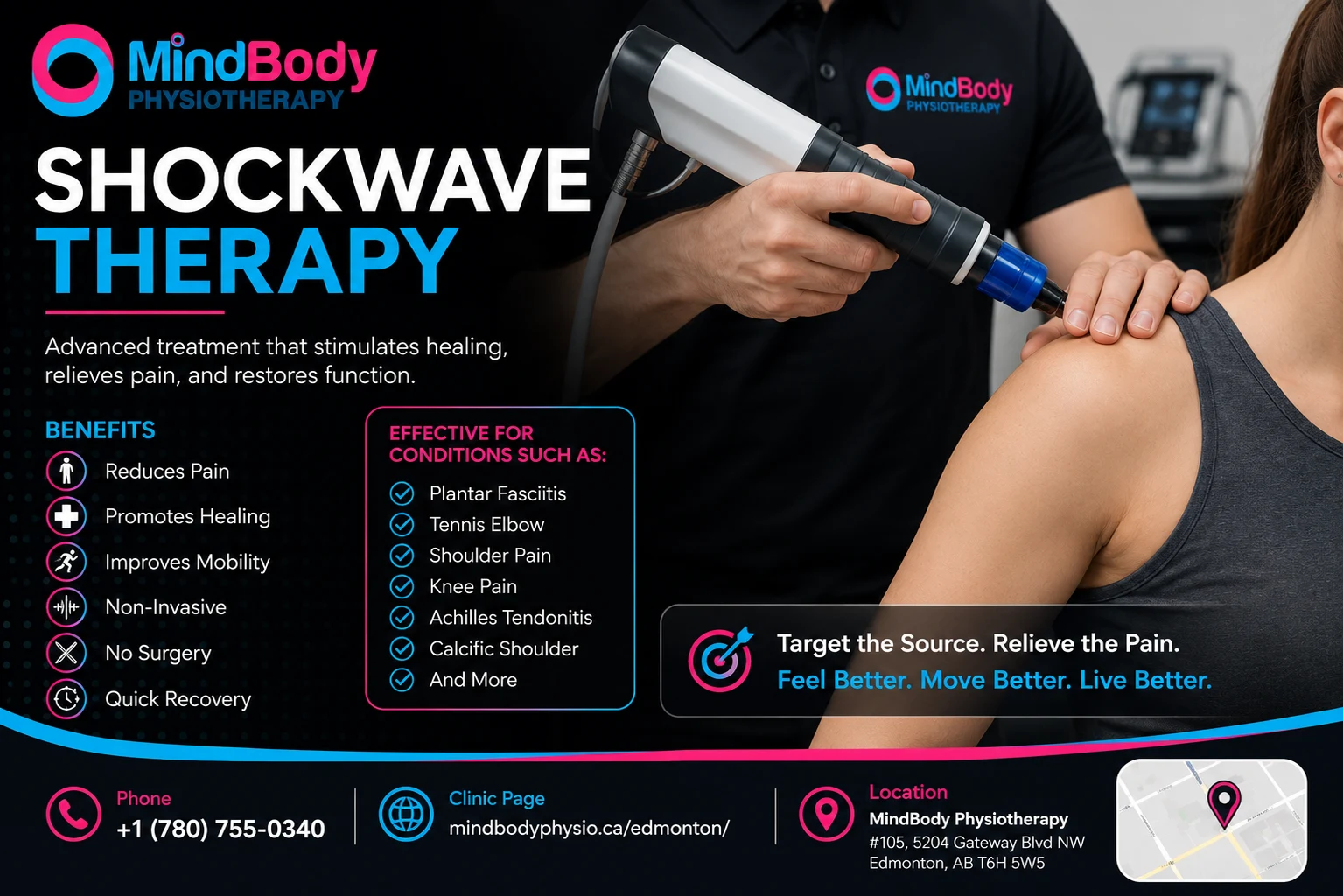
If pain has been slowing you down, shockwave therapy in Edmonton may be worth considering. This non-surgical physiotherapy technique is used for many long-lasting tendon and soft tissue conditions that have not responded well to rest, stretching, or exercise alone.
At Mindbody Physio in Edmonton, physiotherapists assess the source of your pain before deciding whether shockwave treatment is suitable. Every condition is different, so an assessment is the first step toward choosing the right plan.
Whether you’re dealing with heel pain, shoulder pain, tennis elbow, or Achilles tendon discomfort, learning how this treatment works can help you make an informed decision.
What Is Shockwave Therapy in Edmonton?
Shockwave Therapy in Edmonton uses high-energy acoustic waves that are applied to an injured area. These sound waves stimulate the body’s natural repair process and may improve blood circulation while encouraging tissue healing.
Despite its name, there are no electrical shocks involved. Most sessions last between 10 and 20 minutes and take place in a physiotherapy clinic.
Common conditions treated include:
- Plantar fasciitis
- Tennis elbow
- Golfer’s elbow
- Achilles tendinopathy
- Patellar tendinopathy
- Rotator cuff tendinopathy
- Calcific shoulder tendinitis
- Hip tendon pain
- Chronic muscle tightness
Many people choose this approach because it does not require surgery or lengthy recovery periods.
How Does Shockwave Treatment Work?
Shockwave treatment delivers mechanical sound waves into damaged tissue.
These sound waves may:
- Increase local blood flow
- Stimulate tissue repair
- Reduce pain signals
- Break down calcium deposits in certain shoulder conditions
- Improve collagen production
- Support tendon remodeling

Physiotherapists often combine shockwave sessions with exercise therapy, stretching, manual therapy, and movement education for stronger results.
Conditions That May Respond to Shockwave Therapy in Edmonton
Many musculoskeletal conditions can improve when treated early and managed properly.
Heel Pain
Heel pain is one of the most common reasons people seek shockwave therapy in Edmonton.
People often notice pain:
- People often notice pain during the first few steps in the morning.
- After long periods of sitting
- Following walking or running
- At the end of the day
Persistent heel pain can interfere with work, sports, and daily activities.
Shockwave Therapy for Plantar Fasciitis
Shockwave therapy for plantar fasciitis is commonly used when heel pain has continued for several months despite stretching, footwear changes, or activity modification.
Research suggests that extracorporeal shockwave therapy may reduce pain and improve function in many patients with chronic plantar fasciitis.
A physiotherapist may also recommend:
- Calf stretching
- Plantar fascia stretching
- Strengthening exercises
- Footwear advice
- Activity modification
Tennis Elbow
Pain on the outside of the elbow often develops after repetitive gripping or lifting.
Symptoms include:
- Pain while lifting objects
- Weak grip strength
- Tenderness over the elbow
- Pain during sports or work
Many office workers, tradespeople, and athletes experience this condition.
Achilles Tendinopathy
Pain at the back of the ankle may make walking, running, or climbing stairs uncomfortable.
Shockwave therapy is often combined with calf strengthening exercises to improve tendon function over time.
Shoulder Tendon Pain
Calcific tendinitis and rotator cuff tendon conditions sometimes respond well to shockwave treatment.
Patients may notice:
- Pain while lifting the arm
- Night pain
- Reduced shoulder movement
- Difficulty reaching overhead
What Happens During Your Appointment?
When you visit Mindbody Physio, your physiotherapist will begin with a detailed assessment.
This includes:
- Medical history
- Pain pattern
- Functional limitations
- Movement assessment
- Strength testing
- Palpation of the affected area
If shockwave therapy in Edmonton is suitable, treatment may begin during the same visit.
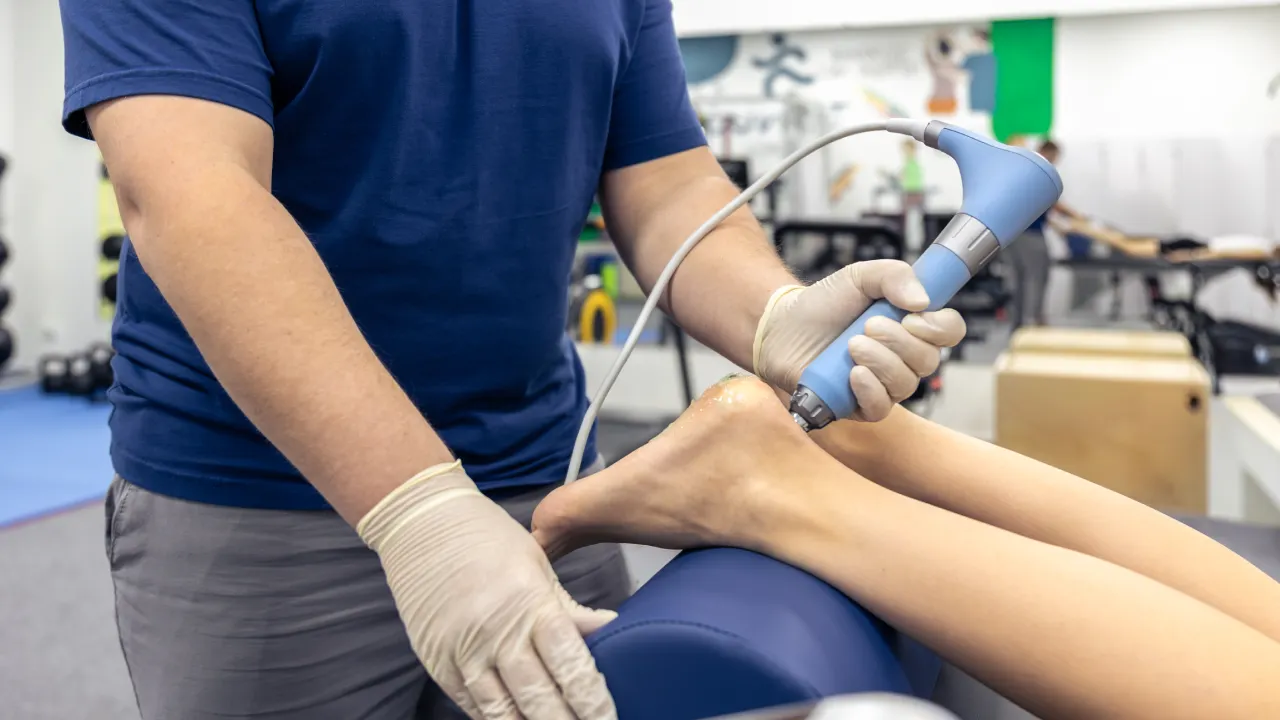
A handheld device delivers acoustic waves directly to the injured tissue.
Many patients describe the sensation as firm tapping. Mild discomfort during treatment is common and usually settles quickly afterward.
What Are the Benefits?
Shockwave therapy: Many patients choose shockwave therapy in Edmonton because it may help:
- Reduce persistent pain
- Improve mobility
- Increase function
- Support tendon repair
- Shorten recovery time
- Reduce dependence on pain medication
- Delay or avoid surgery in suitable cases
Results vary depending on the condition, severity, activity level, and overall health.
What Does Research Say?
Clinical research has shown encouraging outcomes for several chronic tendon conditions.
According to the National Institutes of Health (NIH), extracorporeal shockwave therapy has demonstrated positive results for chronic plantar fasciitis and several tendon disorders when conservative care alone has not provided sufficient improvement.
The Mayo Clinic also notes that chronic tendon conditions often benefit from physiotherapy programs that combine exercise with evidence-based treatment techniques.
Many physiotherapy clinics use radial shockwave therapy for superficial tendon conditions because it allows acoustic energy to be delivered across a broader treatment area.
Is Radial Shockwave Therapy Right for Everyone?
Radial shockwave therapy is suitable for many people, but it is not appropriate for every condition.
It may not be recommended if you:
- Are pregnant
- Have certain bleeding disorders
- Have an active infection near the treatment area
- Have a tumour in the treatment region
- Recently received a corticosteroid injection near the affected tendon
Your physiotherapist will review your medical history before recommending treatment.
What Is Recovery Like?
Most people return to normal daily activities shortly after treatment.
Your physiotherapist may advise you to:
- Avoid heavy impact activities for 24–48 hours.
- Continue prescribed exercises
- Stay active within comfortable limits
- Attend follow-up appointments
Many people receive three to six treatment sessions, depending on the condition and progress.
Are There Any Risks?
Most people tolerate shockwave therapy in Edmonton well. Some temporary effects may occur after a session, including:
- Mild soreness
- Redness around the treatment area
- Minor swelling
- Temporary bruising
These effects usually settle within a few days. Contact your physiotherapist if symptoms become severe or continue longer than expected.
Cost Considerations
The cost of shockwave therapy in Edmonton varies depending on the clinic, the number of sessions required, and whether treatment is included as part of a physiotherapy appointment.
Factors that may influence cost include:
- Your diagnosis
- Duration of symptoms
- Number of treatment sessions
- Additional physiotherapy services
- Extended health insurance coverage
Many workplace and private insurance plans include physiotherapy benefits. Check with your insurance provider to learn what your plan covers before booking your appointment.
When Should You See a Physiotherapist?
You should consider seeing a physiotherapist if:
- Pain has lasted longer than a few weeks.
- Walking, running, or working has become difficult.
- Home exercises have not reduced your symptoms.
- Pain keeps returning after activity.
- Your movement feels restricted.
- You notice weakness around a joint.
- Daily activities have become uncomfortable.
- You want to avoid surgery whenever possible.
Early assessment often helps identify the source of pain before it becomes more difficult to manage.
Tips to Support Recovery
While shockwave therapy in Edmonton may play an important role in recovery, your daily habits also matter.
You can support your healing by:
- Following your exercise program.
- Wearing supportive footwear.
- Gradually returning to sport or work activities.
- Staying active without overloading the injured tissue.
- Maintaining a healthy body weight.
- Sleeping well to support tissue repair.
- Drinking an adequate amount of water daily is essential.
Recovery is usually a gradual process. Consistency with physiotherapy recommendations often leads to steady progress.
Why Choose Mindbody Physio?

At Mindbody Physio in Edmonton, treatment begins with a detailed assessment rather than a one-size-fits-all approach.
Your physiotherapist will:
- Identify the source of your pain.
- Explain your diagnosis in plain language.
- Develop a treatment plan based on your condition.
- Monitor your progress at each visit.
- Adjust exercises as your recovery progresses.
The clinic combines shockwave therapy in Edmonton with movement assessment, exercise therapy, manual therapy, and education to help improve function and support recovery.
Whether your goal is returning to work, getting back to sport, or moving comfortably again, the team works with you throughout the recovery process.
Book an Appointment at Mindbody Physio
If heel pain, tendon pain, or long-standing muscle discomfort is affecting your daily routine, don’t wait for symptoms to become worse.
Contact Mindbody Physio Edmonton to schedule an assessment and learn whether shockwave therapy in Edmonton is appropriate for your condition.
Phone: +1 (780) 755-0340
Clinic Page: https://mindbodyphysio.ca/edmonton/







Get the physiotherapy you deserve!
Call us anytime