

- 16537 Rabbit hill Road SW, Edmonton AB T6W 5P4
- Mon to Fri 9am to 8pm | Sat : 9am to 1 pm | Sun : Closed
 Thu Jul 23
A workplace injury can happen in an instant or develop gradually over time. Whether you’ve strained your back while lifting heavy materials, developed shoulder pain from repetitive movements, or experienced neck stiffness after long hours at a desk, an injury can affect both your ability to work and your daily life.
Many employees are unsure what to expect after a workplace injury. Questions such as “Will I need physiotherapy?”, “What happens during the assessment?”, and “How long will recovery take?” are common. Understanding the assessment process helps reduce uncertainty and allows you to take an active role in your recovery.
In Edmonton, workplace injuries affect employees across many industries, including construction, healthcare, warehousing, transportation, manufacturing, retail, and office environments. Early assessment and appropriate treatment often lead to better outcomes and a safer return to work.
At Mindbody Physio, our experienced team provides comprehensive work injury physiotherapy services, including physiotherapy and massage therapy, to help injured workers recover safely, restore mobility, and return to their regular duties with confidence.
This guide explains what happens during a work injury physiotherapy assessment, why it is important, and how professional treatment supports your recovery.
What Is a Work Injury Physiotherapy Assessment?
A work injury physiotherapy assessment is a comprehensive evaluation performed by a licensed physiotherapist after a workplace injury. The assessment identifies the structures involved, evaluates how the injury affects movement and function, and develops a treatment plan that supports recovery and a safe return to work.
Unlike a quick examination that focuses only on where you feel pain, a physiotherapy assessment looks at how your entire body moves and how the injury affects your ability to perform work-related tasks.
How Does It Work?
A physiotherapist gathers information through discussion, physical examination, movement testing, and functional assessments.
The assessment typically evaluates:
- Pain location and severity
- Joint mobility
- Muscle strength
- Flexibility
- Balance and coordination
- Posture
- Walking pattern
- Functional movement
- Ability to perform work activities
This information helps determine the most appropriate rehabilitation approach.
Why Does a Work Injury Assessment Matter?
Many workplace injuries appear minor at first.
Without proper assessment, underlying problems may remain untreated, increasing the risk of the following:
- Chronic pain
- Reduced mobility
- Recurrent injuries
- Delayed return to work
- Reduced physical performance
A detailed assessment provides the foundation for safe and effective rehabilitation.
Why Should Employees Understand the Process?
Knowing what happens during the assessment helps reduce anxiety and prepares you for your first appointment.
Understanding the process also allows you to:
- Participate actively in recovery
- Ask informed questions
- Follow treatment recommendations
- Recognize realistic recovery expectations
- Prevent future workplace injuries
Why Do Workplace Injuries Happen?
Workplace injuries develop for many different reasons. Some occur suddenly, while others result from repeated stress over time.
Heavy Lifting
Incorrect lifting techniques place excessive stress on the following:
- Lower back
- Shoulders
- Neck
- Knees
Improper lifting may lead to muscle strains, ligament injuries, or joint irritation.
Workers in construction, warehouses, moving services, and healthcare commonly experience these injuries.
Repetitive Movements
Many jobs involve performing the same movement hundreds of times each day.
Examples include:
- Typing
- Assembly line work
- Stocking shelves
- Operating machinery
- Reaching overhead
- Packaging products
Over time, repeated stress irritates muscles, tendons, and joints.
Without adequate recovery, discomfort gradually becomes persistent.
Poor Workplace Ergonomics
Office workers frequently experience neck, shoulder, and back pain due to poorly adjusted workstations.
Common ergonomic problems include:
- Low computer screens
- Unsupported chairs
- Poor keyboard positioning
- Prolonged sitting
- Limited movement breaks
Small ergonomic issues repeated daily can contribute to significant musculoskeletal problems.
Slips, Trips, and Falls
Falls remain one of the most common workplace accidents.
These incidents may cause the following:
- Sprains
- Fractures
- Joint injuries
- Back pain
- Neck injuries
- Shoulder injuries
Early physiotherapy assessment helps determine the extent of injury and supports recovery.
Overexertion
Lifting beyond your physical capacity or working without adequate rest places excessive stress on muscles and joints.
Fatigue reduces coordination and increases injury risk.
Vehicle or Equipment Accidents
Employees who drive as part of their job or operate heavy equipment may experience injuries involving:
- Whiplash
- Back strains
- Shoulder injuries
- Joint trauma
Comprehensive assessment ensures all affected structures are identified.
Signs You Need Work Injury Physiotherapy
Some workplace injuries improve with short-term rest.
Others require professional assessment.
Common Warning Signs
You should consider work injury physiotherapy if you experience the following:
- Persistent pain after a workplace accident
- Neck pain
- Shoulder pain
- Back pain
- Joint stiffness
- Muscle weakness
- Reduced flexibility
- Difficulty lifting objects
- Pain while walking
- Limited movement
- Swelling
- Difficulty performing normal job duties
Hidden Symptoms
Some workplace injuries present subtle symptoms that are easy to overlook.
These include:
- Tingling in the arms or legs
- Numbness
- Reduced grip strength
- Frequent headaches
- Balance problems
- Muscle fatigue
- Poor posture
- Difficulty concentrating because of pain
These symptoms may indicate nerve involvement or movement dysfunction and should not be ignored.
When Should You Seek Professional Help?
Arrange a physiotherapy assessment if:
- Pain lasts longer than a few days.
- Symptoms worsen over time.
- You cannot perform normal work tasks.
- Pain affects sleep or daily activities.
- You notice weakness or numbness.
- Movement becomes increasingly limited.
- Your injury keeps returning after temporary improvement.
Seeking treatment early often shortens recovery time and helps prevent long-term complications.
How Does Professional Work Injury Physiotherapy Work?
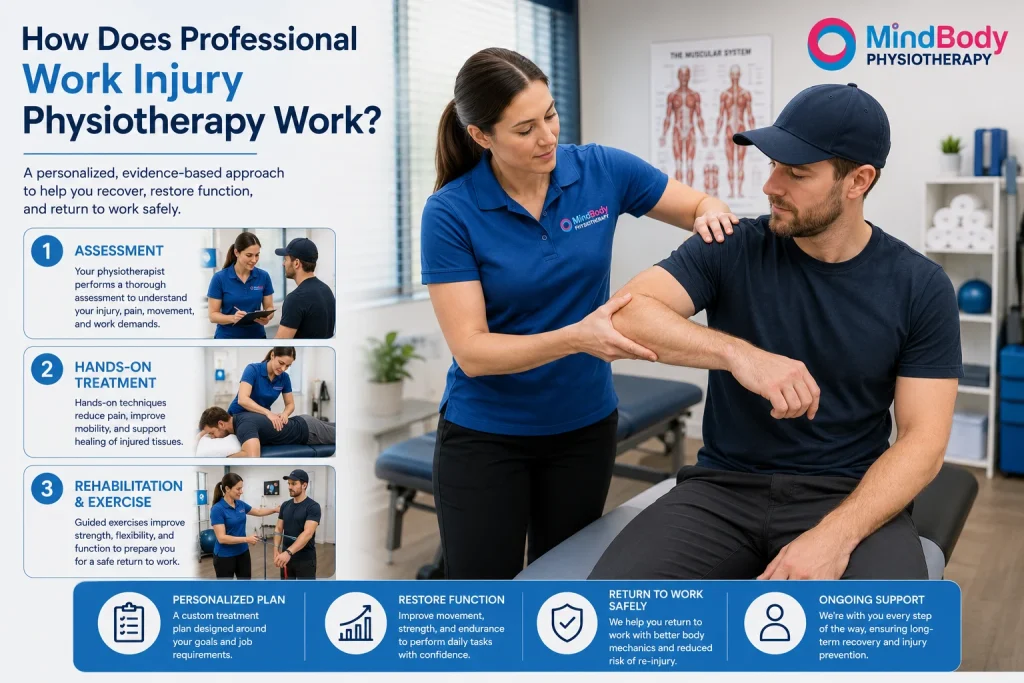
Professional rehabilitation begins with understanding both the injury and the physical demands of your job.
Step 1: Initial Assessment
Your first appointment includes a detailed discussion about the following:
- How the injury occurred
- Your current symptoms
- Medical history
- Previous injuries
- Job responsibilities
- Physical work demands
- Recovery goals
The physiotherapist then performs a physical examination to assess movement, strength, flexibility, posture, balance, and functional abilities.
Step 2: Clinical Diagnosis
Based on the assessment findings, the physiotherapist identifies the tissues involved and determines how the injury affects your ability to perform work safely.
This diagnosis forms the basis of your rehabilitation plan.
Step 3: Personalized Treatment Plan
Once the assessment is complete, your physiotherapist develops a treatment plan based on your diagnosis, symptoms, job demands, and recovery goals.
Every workplace injury is different, so treatment is tailored to your specific condition rather than following a standard program.
Your rehabilitation plan may include:
- Manual therapy
- Joint mobilization
- Soft tissue techniques
- Registered massage therapy
- Therapeutic exercises
- Stretching programs
- Strength and stability training
- Postural correction
- Functional movement training
- Workplace ergonomic education
- Return-to-work planning
If your job involves lifting, carrying, climbing, prolonged standing, or repetitive movements, your rehabilitation program will gradually prepare your body for these activities.
Step 4: Treatment Techniques Used
At MindBody Physio, work injury physiotherapy combines evidence-informed treatment techniques to improve movement and support recovery.
Depending on your injury, treatment may include the following:
Manual Therapy
Hands-on techniques help improve joint mobility, reduce stiffness, and restore normal movement.
Massage Therapy
Registered massage therapy complements physiotherapy by:
- Reducing muscle tension
- Improving circulation
- Enhancing flexibility
- Supporting tissue recovery
- Improving comfort during rehabilitation
Therapeutic Exercise
Exercise is an important part of recovery.
Your physiotherapist may prescribe exercises to
- Restore flexibility
- Improve strength
- Increase endurance
- Improve balance
- Correct movement patterns
Education
Understanding your injury allows you to recover more confidently.
Your physiotherapist explains:
- Safe lifting techniques
- Proper posture
- Workplace ergonomics
- Activity modification
- Injury prevention strategies
Step 5: Monitoring Progress
Recovery is monitored throughout treatment.
Each visit may include a reassessment of
- Pain levels
- Strength
- Range of motion
- Functional movement
- Work capacity
- Exercise progression
Your treatment plan is adjusted as your recovery progresses.
Expected Outcomes
Recovery varies depending on the type of injury, your general health, and the physical demands of your occupation.
Many patients experience improvements, such as
- Reduced pain
- Improved flexibility
- Increased strength
- Better posture
- Improved joint mobility
- Greater confidence during movement
- Improved work performance
- Safe return to regular duties
Following your home exercise program and attending scheduled appointments can help maximize your recovery.
Benefits of Choosing Professional Work Injury Physiotherapy
Receiving professional work injury physiotherapy provides many short-term and long-term advantages.
Faster Recovery
Early assessment identifies the cause of your symptoms and allows treatment to begin before problems become more complex.
Improved Safety
Returning to work too early may increase the risk of reinjury.
Professional rehabilitation ensures your body is prepared for workplace demands.
Long-Term Results
Treatment focuses on correcting movement problems rather than simply reducing pain.
This helps improve long-term function and lowers the chance of recurring injuries.
Cost Savings
Early rehabilitation may reduce:
- Lost work time
- Future medical expenses
- Long-term disability risks
- Ongoing treatment requirements
Improved Job Performance
Restoring strength, mobility, and endurance helps employees return to work with greater confidence and physical capacity.
Injury Prevention
Physiotherapy also teaches movement strategies that reduce stress on muscles and joints during everyday work tasks.
Common Mistakes People Make
Many workplace injuries take longer to recover because of avoidable mistakes.
Ignoring Symptoms
Minor discomfort may become a more serious injury if treatment is delayed.
Returning to Work Too Soon
Pain reduction does not always mean tissues have fully recovered.
Returning too early may delay healing.
Skipping Home Exercises
Exercises prescribed between appointments are an essential part of rehabilitation.
Consistent practice supports faster recovery.
Poor Ergonomics
Continuing to work with poor posture or improper workstation setup often contributes to recurring pain.
Trying to “Push Through”
Working through pain may worsen tissue damage and prolong recovery.
Prevention and Maintenance Tips
Reducing workplace injuries begins with healthy work habits.
Practice Safe Lifting
- Bend your knees.
- Keep loads close to your body.
- Avoid twisting while lifting.
- Ask for assistance with heavy objects.
Maintain Good Ergonomics
Adjust:
- Chair height
- Monitor position
- Keyboard placement
- Desk setup
Small changes can significantly reduce physical strain.
Take Regular Movement Breaks
Avoid remaining in one position for extended periods.
Stand, stretch, and move every 30 to 60 minutes when possible.
Stay Physically Active
Regular exercise improves flexibility, strength, balance, and endurance.
Report Symptoms Early
Don’t ignore:
- Persistent soreness
- Joint stiffness
- Tingling
- Weakness
- Reduced mobility
Early intervention often prevents more serious injuries.
How to Choose the Right Work Injury Physiotherapy Provider in Edmonton
Selecting the right clinic is an important step in your recovery.
Look for a provider that offers:
Experienced Physiotherapists
Choose a clinic with experience treating workplace injuries across a variety of industries.
Comprehensive Assessments
A thorough assessment should identify the root cause of your injury before treatment begins.
Integrated Care
A clinic that offers both physiotherapy and registered massage therapy can provide more comprehensive rehabilitation.
Evidence-Informed Treatment
Modern rehabilitation combines manual therapy, exercise, education, and functional training.
Positive Reputation
Read patient reviews to learn about treatment quality, communication, and patient outcomes.
Local Experience
A provider familiar with Edmonton’s industries, employers, and work environments can better understand the physical demands you face.
Why Choose Mindbody Physio?
At Mindbody Physio, we help injured workers throughout Edmonton recover safely and confidently through comprehensive work injury physiotherapy services.
Our team understands that every workplace injury is unique. We begin with a detailed assessment, identify the underlying cause of your symptoms, and develop an individualized treatment plan focused on restoring movement and supporting your return to work.
Our services include physiotherapy, registered massage therapy, manual therapy, therapeutic exercise, and patient education, providing a well-rounded approach to rehabilitation.
Patients choose Mindbody Physio because we provide the following:
- Experienced physiotherapists and registered massage therapists
- Individualized treatment plans
- Evidence-informed rehabilitation
- One-on-one care
- Functional return-to-work programs
- A welcoming and supportive clinic environment
- A strong commitment to helping patients achieve long-term recovery
Whether your injury occurred in an office, warehouse, construction site, healthcare facility, or another workplace, our team is here to support your recovery every step of the way.
Contact Us
If you’ve experienced a workplace injury, early assessment can help you recover safely and return to work with confidence.
Mindbody Physio
Address:
16537 Rabbit Hill Road SW
Edmonton, AB T6W 5P4
Phone:
+1 (780) 755-0340
Website:
https://mindbodyphysio.ca/edmonton/
Location:
https://maps.app.goo.gl/B5BQ9uYeZ5HaQrSD7
Contact Mindbody Physio today to schedule your work injury physiotherapy assessment. Our experienced team is ready to help you reduce pain, restore mobility, and support a safe return to work.
Frequently Asked Questions
1. What happens during a work injury physiotherapy assessment?
A physiotherapist reviews your medical history, discusses how the injury occurred, evaluates your movement, strength, flexibility, posture, and functional abilities, and then creates a personalized rehabilitation plan.
2. How soon should I start work injury physiotherapy after a workplace injury?
Early assessment is recommended whenever possible. Beginning treatment soon after an injury may improve recovery and reduce the risk of long-term complications.
3. Can massage therapy be included in workplace injury rehabilitation?
Yes. Registered massage therapy is often used alongside physiotherapy to reduce muscle tension, improve circulation, and support soft tissue recovery.
4. How long does workplace injury rehabilitation take?
Recovery depends on the type and severity of the injury, your overall health, and your job requirements. Your physiotherapist will discuss an expected timeline after your assessment.
5. Will physiotherapy help me return to work safely?
Yes. Treatment focuses on restoring strength, mobility, endurance, and functional movement so you can safely perform your work duties.
6. What should I bring to my first physiotherapy appointment?
Bring any relevant medical information, workplace injury documentation if applicable, comfortable clothing that allows movement, and a list of your current symptoms or medications.
7. Why choose Mindbody Physio for Work Injury Physiotherapy in Edmonton?
Mindbody Physio provides comprehensive workplace injury rehabilitation through experienced physiotherapists and registered massage therapists. We focus on identifying the root cause of your injury, creating personalized treatment plans, and helping you recover safely while supporting a confident return to work.






Get the physiotherapy you deserve!
Call us anytime