

- 16537 Rabbit hill Road SW, Edmonton AB T6W 5P4
- Mon to Fri 9am to 8pm | Sat : 9am to 1 pm | Sun : Closed
 Thu Jul 23
Neck pain and shoulder pain are among the most common musculoskeletal conditions affecting people of all ages. Whether you spend long hours working at a computer, perform physically demanding tasks, or enjoy recreational sports, pain in these areas can interfere with work, sleep, exercise, and everyday activities.
Many people dismiss stiffness or soreness as a temporary inconvenience, hoping it will disappear on its own. Unfortunately, untreated pain can gradually become more persistent, limiting mobility and affecting overall quality of life.
For residents of Edmonton, changing weather conditions, long commutes, office-based work, and active lifestyles can all contribute to muscle tension and joint problems. Recognizing the underlying cause is the first step toward effective recovery.
At Mindbody Physio, we provide comprehensive neck pain treatment and shoulder pain treatment through physiotherapy and massage therapy. Our goal is to identify the root cause of your symptoms, restore healthy movement, and help you return to the activities you enjoy.
This guide explains why neck and shoulder pain develop, when to seek professional care, and how physiotherapy and massage therapy can support lasting recovery.
What Are Shoulder Pain and Neck Pain?
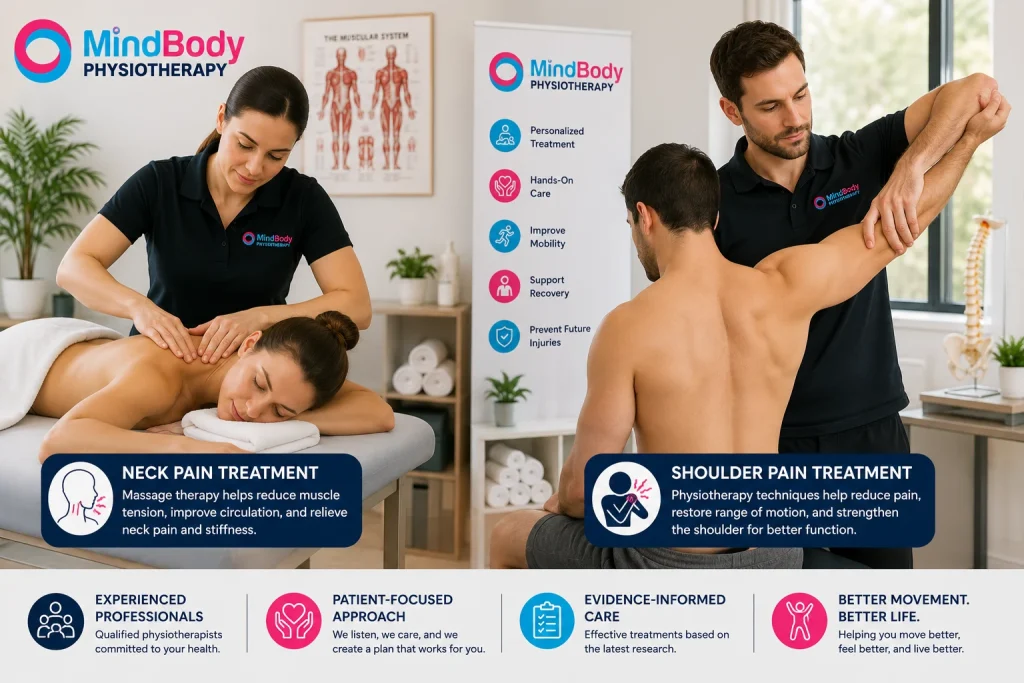
Shoulder pain and neck pain refer to discomfort that affects the muscles, joints, ligaments, tendons, nerves, or other soft tissues surrounding the neck and shoulder region.
Although these areas are closely connected, pain may begin in one location and spread to another. For example, tight muscles in the neck may contribute to shoulder discomfort, while a shoulder injury can alter posture and increase strain on the neck.
How Do They Work Together?
The neck and shoulders function as one movement system.
Everyday activities such as:
- Looking at a computer
- Driving
- Lifting groceries
- Exercising
- Carrying children
- Sleeping
All require coordinated movement between these regions.
When one structure becomes injured or restricted, nearby muscles often compensate, creating additional stress that may lead to ongoing discomfort.
Why Does Pain Develop?
Pain develops when tissues become overloaded, irritated, inflamed, or injured.
This may result from:
- Repetitive movements
- Poor posture
- Sudden injuries
- Muscle imbalances
- Joint stiffness
- Nerve irritation
- Degenerative changes
Some conditions develop suddenly, while others progress gradually over months or years.
Why Is It Important to Understand the Cause?
Many people focus only on reducing pain.
However, identifying the underlying cause is essential because effective treatment depends on an accurate assessment.
Understanding the source of your symptoms helps:
- Prevent recurring pain
- Improve recovery time
- Restore normal movement
- Reduce the risk of long-term complications
- Support healthier daily habits
Professional assessment allows treatment to target the cause rather than simply masking symptoms.
Why Do Shoulder Pain and Neck Pain Happen?
Several factors can contribute to neck and shoulder discomfort. In many cases, more than one cause is involved.
Poor Posture
Poor posture remains one of the leading causes of neck and shoulder pain.
Many people spend hours:
- Working at computers
- Looking at phones
- Driving
- Watching television
Forward head posture places excessive stress on the muscles supporting the neck and shoulders.
Over time, these muscles become fatigued, resulting in stiffness, headaches, and reduced mobility.
Muscle Overuse
Repeated movements can overload muscles and tendons.
Examples include:
- Typing
- Painting
- Construction work
- Warehouse lifting
- Hairdressing
- Dental work
Without adequate recovery, muscles remain tight and irritated, eventually contributing to chronic discomfort.
Sports Injuries
Athletes frequently experience shoulder and neck injuries due to repetitive overhead movements or physical contact.
Common sports include:
- Hockey
- Volleyball
- Swimming
- Tennis
- Weightlifting
- Baseball
Rotator cuff irritation, muscle strains, and joint instability often develop gradually if early symptoms are ignored.
Stress and Muscle Tension
Emotional stress affects physical health more than many people realize.
Stress often causes unconscious tightening of the following:
- Neck muscles
- Upper shoulders
- Jaw
- Upper back
Persistent muscle contraction may lead to:
- Tension headaches
- Neck stiffness
- Shoulder pain
- Reduced flexibility
Massage therapy can help reduce muscular tension, while physiotherapy addresses movement dysfunction.
Previous Injuries
Old injuries sometimes continue affecting movement years after healing.
Scar tissue, weakness, or altered movement patterns may place additional stress on nearby joints and muscles.
Professional rehabilitation helps restore balanced movement.
Degenerative Changes
As we age, normal wear and tear affects joints, discs, and connective tissues.
Conditions such as osteoarthritis or cervical disc degeneration may contribute to ongoing neck or shoulder pain.
Early management often helps maintain mobility and daily function.
Nerve Compression
Nerves traveling from the neck into the shoulder and arm may become compressed.
Common symptoms include:
- Tingling
- Numbness
- Burning pain
- Weakness
- Pain travelling into the arm or hand
These symptoms should always be assessed by a healthcare professional.
Signs You Need Neck Pain Treatment or Shoulder Pain Treatment
Occasional soreness after activity is normal.
However, persistent symptoms should not be ignored.
Common Warning Signs
You may benefit from professional care if you experience:
- Persistent neck pain
- Shoulder pain lasting more than a few days
- Difficulty lifting your arm
- Pain while reaching overhead
- Muscle stiffness
- Reduced flexibility
- Pain while driving
- Difficulty turning your head
- Shoulder weakness
- Pain that interrupts sleep
Hidden Symptoms
Some symptoms are less obvious but still indicate an underlying problem.
These include:
- Frequent headaches
- Tingling in the fingers
- Poor posture
- Clicking during movement
- Muscle fatigue
- Reduced athletic performance
- Difficulty concentrating because of pain
When Should You Seek Professional Help?
Book an assessment if:
- Pain continues for more than one to two weeks.
- Symptoms worsen despite rest.
- You notice numbness or weakness.
- Your range of motion becomes limited.
- Pain affects work, driving, exercise, or sleep.
- Symptoms return repeatedly after temporary improvement.
Early assessment often leads to faster recovery and reduces the risk of chronic pain.
How Does Professional Neck Pain Treatment and Shoulder Pain Treatment Work?
Effective treatment begins with identifying the root cause rather than focusing only on painful areas.
Comprehensive Assessment
At Mindbody Physio, treatment starts with a detailed consultation.
Your physiotherapist will discuss:
- Medical history
- Current symptoms
- Daily activities
- Work demands
- Exercise routine
- Previous injuries
A physical examination evaluates posture, muscle strength, flexibility, joint mobility, movement patterns, and nerve function to determine the source of your pain.
Diagnosis
Based on the assessment, your physiotherapist identifies the structures contributing to your symptoms and develops an individualized treatment plan.
This may involve muscular strain, tendon irritation, joint dysfunction, nerve involvement, or movement imbalances.
Treatment Techniques Used
Following your assessment, your physiotherapist will recommend a treatment plan designed to address the cause of your symptoms while supporting long-term recovery. At Mindbody Physio, neck pain treatment and shoulder pain treatment often combine physiotherapy with massage therapy to improve movement and reduce discomfort.
Treatment may include:
- Manual therapy to improve joint mobility
- Soft tissue mobilization
- Registered massage therapy
- Stretching exercises
- Strengthening programs
- Postural correction
- Functional movement training
- Ergonomic advice
- Home exercise programs
- Education on activity modification
Every treatment plan is adjusted according to your symptoms, lifestyle, and recovery goals.
Expected Outcomes
Most patients notice gradual improvements as treatment progresses.
Expected outcomes may include:
- Reduced pain and stiffness
- Improved neck and shoulder mobility
- Better posture
- Increased strength
- Easier participation in work and recreational activities
- Improved sleep quality
- Reduced risk of future injuries
Recovery time varies depending on the severity of the condition, overall health, and commitment to the recommended treatment plan.
Benefits of Choosing Professional Neck Pain Treatment and Shoulder Pain Treatment
Seeking professional care offers more than temporary symptom management. A comprehensive treatment plan addresses the underlying cause of pain while supporting long-term health.
Faster Recovery
Professional assessment helps identify the source of discomfort early, allowing treatment to begin before symptoms become more severe.
Early intervention often shortens recovery time and reduces the likelihood of chronic pain.
Improved Mobility
Restricted movement can affect daily activities such as driving, exercising, lifting, and even sleeping.
Physiotherapy and massage therapy work together to restore flexibility and improve overall function.
Long-Term Results
Rather than simply masking symptoms, professional care focuses on correcting movement problems and strengthening supporting muscles.
This helps reduce the chance of recurring pain.
Cost Savings
Ignoring pain often leads to more complex injuries that require longer treatment.
Addressing the problem early may reduce healthcare costs and minimize time away from work or recreational activities.
Safe, Evidence-Informed Care
Treatment provided by qualified physiotherapists and registered massage therapists is based on current clinical knowledge and tailored to your individual needs.
Better Performance
Whether you’re an office worker, an athlete, or someone with a physically demanding job, improved movement and strength can enhance daily performance while reducing strain on your body.
Common Mistakes People Make
Many people unintentionally prolong their recovery by making common mistakes.
Ignoring Persistent Pain
Waiting weeks or months before seeking professional help may allow minor problems to become chronic conditions.
Relying Only on Pain Medication
Pain medication may temporarily reduce discomfort but does not address the underlying cause of muscle imbalance or joint dysfunction.
Poor Posture
Slouching while sitting or looking down at electronic devices for extended periods places continuous stress on the neck and shoulders.
Returning to Activity Too Soon
Resuming heavy lifting or sports before full recovery increases the risk of reinjury.
Skipping Home Exercises
Rehabilitation exercises help reinforce improvements made during treatment.
Failing to complete these exercises may slow progress.
Prevention and Maintenance Tips
Healthy habits can reduce the likelihood of developing neck and shoulder pain.
Maintain Good Posture
Keep your computer screen at eye level and avoid looking down at your phone for prolonged periods.
Exercise Regularly
Strengthening the neck, shoulders, and upper back helps improve posture and joint stability.
Stretch Daily
Gentle stretching helps maintain flexibility and reduce muscle tension.
Take Frequent Breaks
If you work at a desk, stand up, stretch, and move around every 30 to 60 minutes.
Lift Properly
Use your legs rather than your back and avoid lifting heavy objects above shoulder height whenever possible.
Manage Stress
Stress-management techniques such as breathing exercises, regular physical activity, and massage therapy may help reduce muscle tension.
Watch for Early Warning Signs
Seek professional care if you notice:
- Recurring stiffness
- Frequent headaches
- Limited range of motion
- Tingling or numbness
- Weakness in the shoulder or arm
- Pain that interferes with sleep
How to Choose the Right Physiotherapy Clinic in Edmonton
Choosing the right clinic can make a significant difference in your recovery.
When comparing providers, look for:
Experienced Professionals
Choose a clinic with licensed physiotherapists and registered massage therapists experienced in treating musculoskeletal conditions.
Comprehensive Assessments
A quality clinic should perform a thorough evaluation before recommending treatment.
Evidence-Informed Care
Look for providers who combine hands-on therapy with exercise-based rehabilitation and patient education.
Modern Treatment Techniques
A clinic offering physiotherapy, massage therapy, manual therapy, and personalized rehabilitation plans can provide more comprehensive care.
Positive Reviews
Patient testimonials and online reviews provide valuable insight into treatment quality and patient satisfaction.
Local Knowledge
A clinic familiar with Edmonton’s workplaces, sports community, and active lifestyle can better understand the unique challenges local residents face.
Why Choose Mindbody Physio?
At Mindbody Physio, we are committed to helping individuals throughout Edmonton move better, recover from injuries, and improve their quality of life.
Our team provides comprehensive neck pain treatment and shoulder pain treatment through an integrated approach that combines physiotherapy and registered massage therapy.
Patients choose Mindbody Physio because we offer:
- Experienced physiotherapists and registered massage therapists
- Thorough assessments to identify the root cause of pain
- Personalized treatment plans
- Evidence-informed rehabilitation
- Hands-on manual therapy
- Exercise-based recovery programs
- Patient education for long-term success
- A welcoming, supportive environment focused on your recovery
Whether your symptoms began after an injury, repetitive work, sports, or everyday activities, our team is here to help you regain confidence in your movement and return to the activities you enjoy.
Contact Us
If neck pain or shoulder pain is limiting your daily activities, professional care can help you identify the cause and begin your recovery.
Mindbody Physio
📍 Address:
16537 Rabbit Hill Road SW
Edmonton, AB T6W 5P4
📞 Phone:
+1 (780) 755-0340
🌐 Website:
https://mindbodyphysio.ca/edmonton/
📍 Find Us:
https://maps.app.goo.gl/B5BQ9uYeZ5HaQrSD7
Contact Mindbody Physio today to schedule an assessment and discover how physiotherapy and massage therapy can help restore comfortable movement and support your long-term health.
Frequently Asked Questions
1. What is the most common cause of neck and shoulder pain?
Poor posture, repetitive movements, muscle strain, sports injuries, and stress are among the most common causes of neck and shoulder pain.
2. When should I seek neck pain treatment?
If your neck pain lasts longer than one to two weeks, limits movement, causes headaches, or is accompanied by numbness or weakness, you should seek professional assessment.
3. Can physiotherapy help shoulder pain?
Yes. Physiotherapy helps improve mobility, strengthen muscles, reduce pain, and restore normal movement through individualized treatment programs.
4. Does massage therapy help neck pain?
Registered massage therapy can reduce muscle tension, improve circulation, and complement physiotherapy by improving soft tissue mobility.
5. How many treatment sessions will I need?
The number of sessions varies depending on your condition, severity of symptoms, overall health, and recovery goals. Your physiotherapist will discuss an appropriate treatment plan after your assessment.
6. Can I prevent neck and shoulder pain?
Maintaining good posture, exercising regularly, stretching, taking movement breaks, and addressing symptoms early can significantly reduce your risk.
7. Why choose Mindbody Physio for Neck Pain Treatment and Shoulder Pain Treatment in Edmonton?
Mindbody Physio provides personalized care through experienced physiotherapists and registered massage therapists who focus on identifying the root cause of your symptoms. Our integrated approach combines hands-on therapy, rehabilitation exercises, and patient education to support lasting recovery and improved mobility.






Get the physiotherapy you deserve!
Call us anytime